



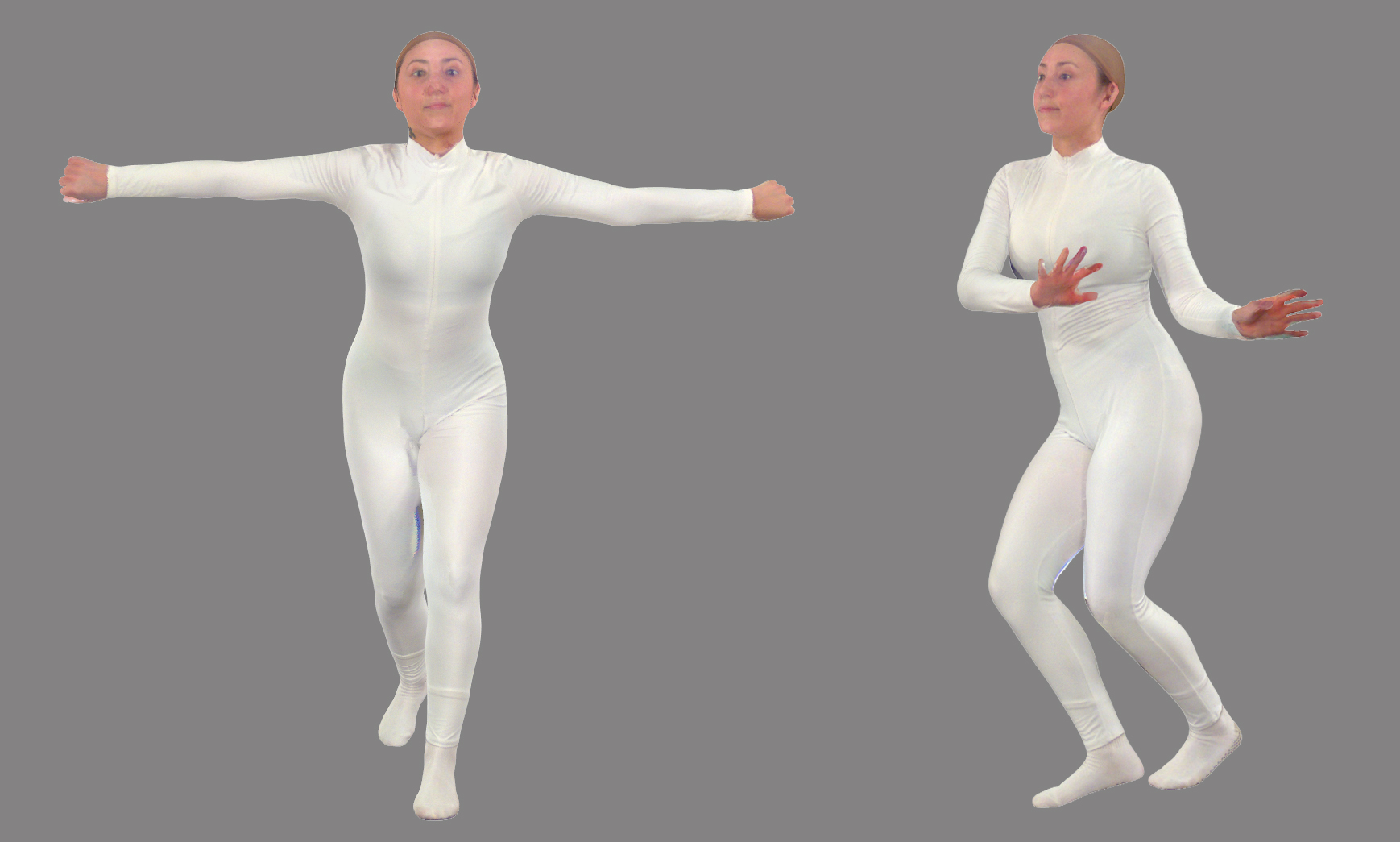
The IBV transforms the creation of digital human doubles by integrating 4D scanning and automating highly specialised processes
The growth of digital content has increased demand for ever more realistic avatars capable of bridging the virtual and real worlds. However, creating this type of content requires highly specialised profiles, such as the avatar creator and the animator or “rigger”, who work with multiple software tools with specific functionalities. This increases licensing, training and interoperability costs, while process fragmentation reduces efficiency and lengthens production times and costs. One of the sector’s main challenges — and one of the most costly and specialised tasks — is the creation, editing and integration of human characters with realistic animations, as well as their incorporation into different production platforms. As a result, optimising and automating these processes has become a key competitiveness factor for companies in fields such as video games, entertainment, and virtual and augmented reality.
In response to this need, Instituto de Biomecánica (IBV) is developing the METAVATAR project, which represents a profound transformation in the way digital characters are created. On the one hand, it integrates 3D video capture and processing (or volumetric video) into the workflow through 4D scanning technologies, so that the realism of the animated character’s “base” starts from a real capture, not merely a realistic one. On the other hand, it automates the transformation of topology, virtual skeleton and character animation into the formats, structures and hierarchies required by different 3D content production and integration platforms.
This new, flexible and optimised workflow integrates the capture and creation of hyper-realistic digital human doubles, ready for production, in a single step. In this way, it reduces time, costs and dependence on highly specialised profiles compared to the traditional processes used in the audiovisual and entertainment industry.
In the words of Carmelo Lizarraga, Director of Innovation in the Technologies area at IBV: “With METAVATAR we have optimised the creation of realistic characters, managing to halve production times and improve their level of realism. To achieve this, we have developed an advanced and versatile method for converting topologies and skeletons that allows the digital doubles obtained with our MOVE4D technology to be imported into the leading platforms and graphics engines without the need for manual operations, facilitating their compatibility and interoperability with other animation systems while ensuring smooth and coherent animation.”
The methodology developed in METAVATAR represents a qualitative leap in digital content production by simplifying and optimising complex and costly processes, and by democratising access to advanced technology for companies with limited resources for the creation of avatars and immersive experiences.
Collaboration with Valencian companies
The METAVATAR project involves collaboration with Valencian companies such as Play&Go Experience, Aumenta Vilanova, Nunsys and Innoarea Projects, which contribute their expertise in fields such as gamification, augmented reality and virtual reality. “Collaboration with these companies not only serves to validate the feasibility of the developments in real production environments, but also to promote genuine transfer of the results to the business community and strengthen the competitiveness of the Valencian Community’s business ecosystem, which is thus positioned at the forefront of applied digital innovation in Europe,” Lizarraga concluded.
Finally, it should be noted that the METAVATAR project is supported by the Conselleria d’Innovació, Indústria, Comerç i Turisme of the Generalitat Valenciana, through IVACE+i, and is funded by the European Union through the ERDF Programme Comunitat Valenciana 2021–2027 (IMDEEA/2025/44).