



Proper maintenance of artificial turf pitches extends their lifespan and reduces the risk of injury
21 October 2025.
Author/s: Rafael Mengual Ortolà, Ricard Barberà-Guillem, Juan Carlos González García, Laura Magraner Llavador.
Instituto de Biomecánica (IBV)
This article presents the results of a study conducted by the Institute of Biomechanics (IBV) in collaboration with the Barcelona Provincial Council. The study assessed six football pitches in the province of Barcelona before and after a series of maintenance activities including decompaction, rubber infill layer replenishment, brushing, and joint repair. The assessment measured several parameters related to the mechanical and functional requirements that sports surfaces must meet under the UNE-EN 15330-1:2014 standard. The results show that proper maintenance improves playability and safety and helps to prolong the service life of the playing field by restoring and maintaining optimal playing conditions over an extended period of time.
INTRODUCTION
Having revolutionised sports practice in recent decades, artificial turf pitches have now firmly established themselves as an efficient and durable alternative to natural grass pitches. However, user safety and pitch the performance depend on regular and appropriate maintenance. A lack of care can accelerate surface deterioration, affect the quality of play, and increase the risk of injury. Not to mention the consequent high cost of replacing the pitch.
The primary aim of this study was to assess the impact of regular maintenance on the mechanical and functional properties of the playing surface, using a comparative assessment protocol carried out before and after each intervention, as detailed in the Materials and Methods section below.
MATERIAL AND METHODS
This study was conducted on six artificial turf football pitches in the province of Barcelona. Each facility presented unique characteristics in terms of age, intensity of use, and specific maintenance requirements.
The study was undertaken in three phases, as follows:
- Initial diagnosis. The functional state of each pitch was assessed using standard tests and IBV proprietary methods. The aim of this phase was to identify deficiencies and determine the most appropriate maintenance actions required.
- Execution of the maintenance actions defined in the previous phase.
- Post-Maintenance Assessment. The tests were repeated once the recommended interventions had been implemented, in order to assess the effectiveness of the actions performed.
The maintenance tasks included decompaction, brushing, replenishing the encapsulated SBR rubber infill, and, in one case, repairing open joints. Table 1 summarises the interventions carried out on each pitch:
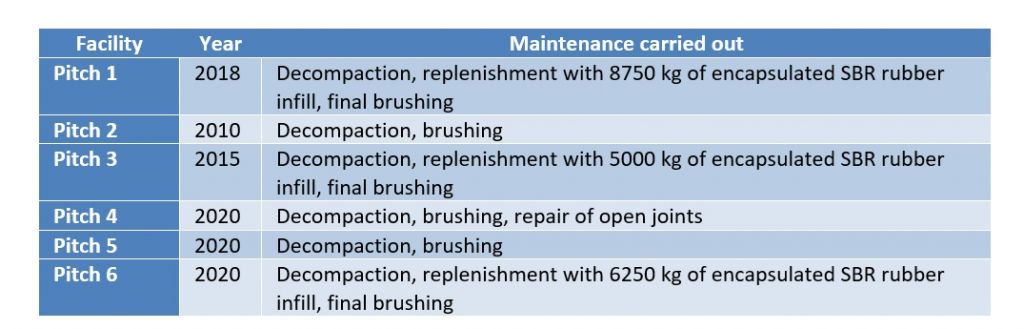
Table 1. Maintenance interventions per pithc.
The assessed variables were split into two categories:
- Functional parameters:
- Shock absorption(UNE-EN 14808: 2006)
- Vertical deformation (UNE-EN 14809:2006 / AC:2008)
- Ball roll behaviour and vertical ball behaviour (UNE-EN 12235:2014, UNE-EN 12234:2014)
- Rotational resistance (UNE-EN 15301-1:2008)
- Water infiltration rate (UNE-EN 12616:2014)
- Surface regularity (UNE-EN 13036-7:2004)
- Construction and wear parameters:
- Total length and thickness of the artificial turf fibres (IBV proprietary methods)
- Total thickness of the infill layer material (IBV proprietary methods)
All measurements were made in situ, following the sampling points distributed over the pitch as per the standard. The only exception was the fibre thickness, which was determined in a laboratory, based on samples collected on the pitch itself. Figure 1 includes images of some of the tests being carried out on the pitch.
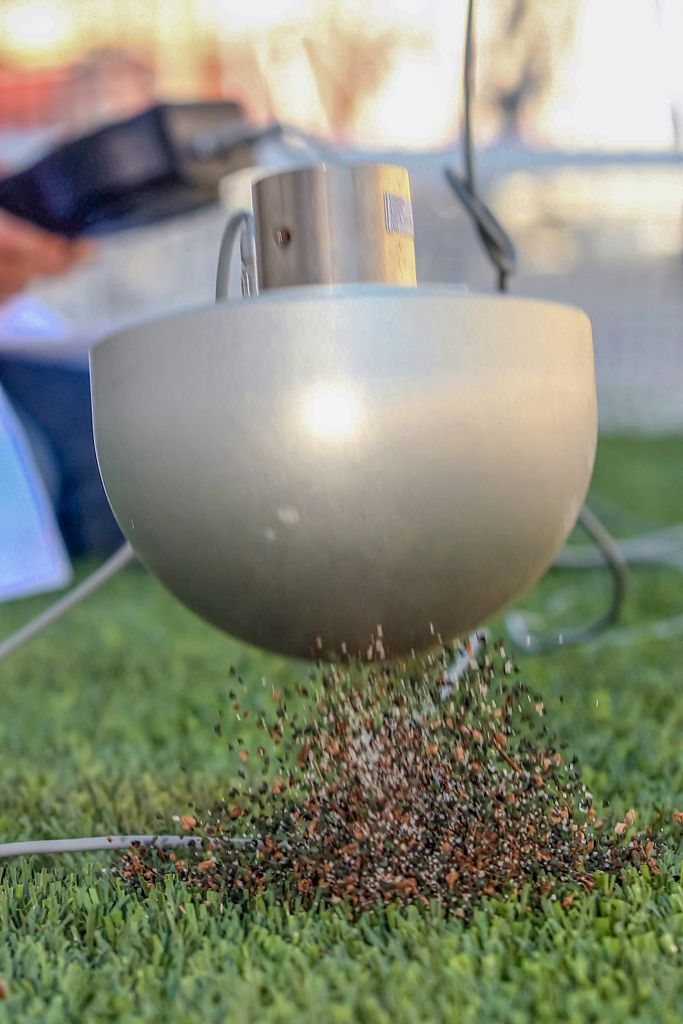
Figure 1. Details of impact absorption test.
Data processing consisted of a descriptive and comparative analysis of the reference parameters before and after maintenance. The interpretation of the results was adjusted to take into consideration the age of the facility and the nature of the interventions carried out. Given the limited sample size, the analysis drew heavily on the technical expertise of the IBV to develop practical, operational recommendations for future maintenance programmes.
RESULTS
Figure 2 presents the results of the study, which are organised around four key areas: player safety, ball behaviour, constructive surface aspects, and the additional characterisation of the fibres and the infill layer. Specific observations relating to the oldest pitch are also included. The analysis of this pitch is particularly interesting due to the potential for extrapolating the findings to other facilities that are at an advanced stage or approaching the end of their service life.
PLAYER SAFETY
Maintaining artificial turf football pitches notably improves player safety by optimising parameters such as shock absorption, vertical deformation, and rotational resistance. This reduces the risk of injury and provides a more homogeneous playing surface. These improvements were observed across every pitch, regardless of its age. However, in the oldest facilities, although the safety values increased and stabilised, they did not always meet the required standard ranges. This therefore indicates a significant improvement, but one with limitations associated with the ageing of the surface.
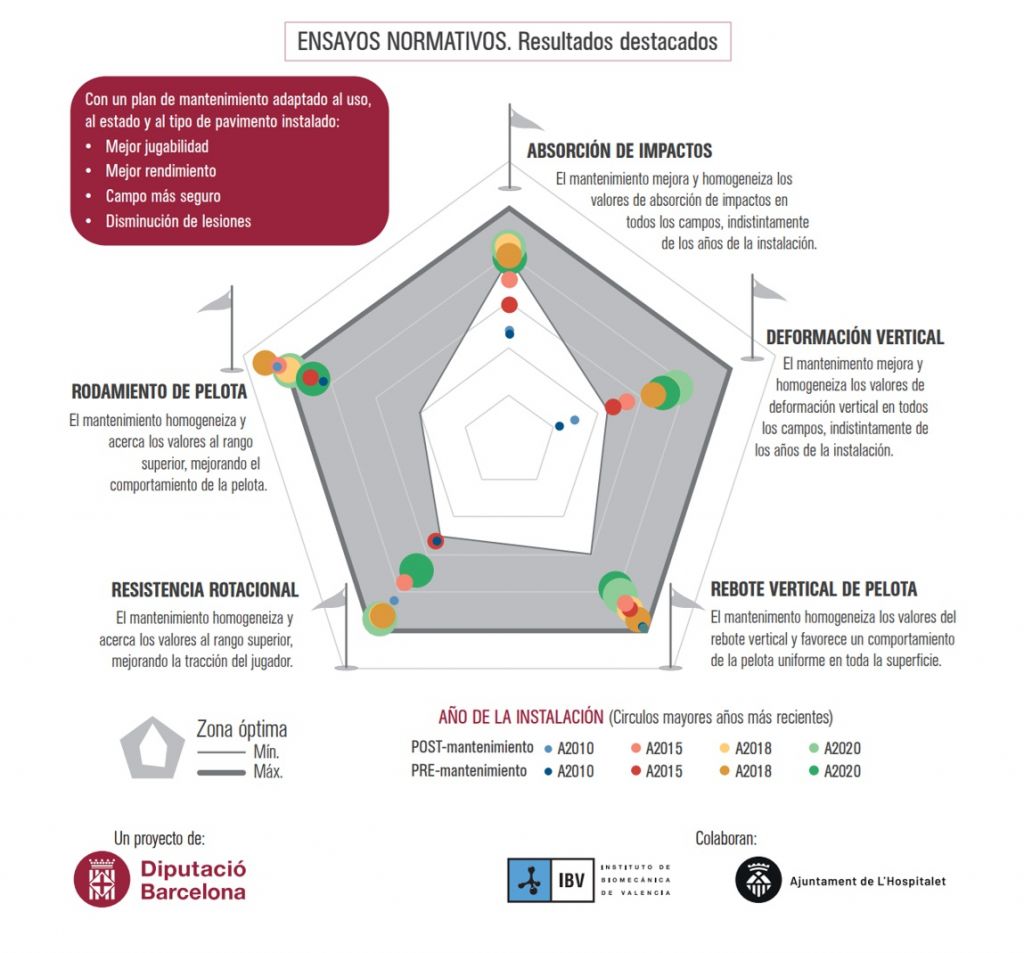
Figure 2. Representation of the test values per pitch, before and after maintenance.
BALL BEHAVIOUR
Maintaining artificial turf football pitches notably improves player safety by optimising parameters such as shock absorption, vertical deformation, and rotational resistance. This reduces the risk of injury and provides a more homogeneous playing surface. These improvements were observed across every pitch, regardless of its age. However, in the oldest facilities, although the safety values increased and stabilised, they did not always meet the required standard ranges. This therefore indicates a significant improvement, but one with limitations associated with the ageing of the surface.
CONSTRUCTIVE ASPECTS
In the detailed study of the constructive variables, the following points are worth highlighting:
- Surface permeability improved on every pitch following maintenance, facilitating more efficient water evacuation. These improvements can be attributed primarily to the decompaction work carried out.
- As far as surface regularity is concerned, all the pitches met the standard criterion (<10 mm). Any specific defects that were detected (such as open joints or breakages) were corrected by routine maintenance actions.
Pitch decompaction and brushing facilitate the vertical positioning of the fibres, thereby increasing their durability. Moreover, improving the regularity of the pitch by eliminating specific defects, coupled with the improvement in rotational resistance, shock absorption and vertical deformation, has a positive effect on overall pitch safety.
ADDITIONAL CHARACTERISATION OF THE FIBRES AND THE INFILL LAYER
Maintenance—specifically decompaction, infill layer replenishment, and brushing—contributed to increasing the quantity and volume of the granular infill layer material. This action improved the verticality of the artificial turf fibres, which resulted in an increase in both the fibres’ total effective length and the overall thickness of the infill layer. However, a detailed laboratory analysis of high resolution photographs revealed that in the case of facilities older than 8 years, fibre thickness can diminish by over 10% of its original value. Reduced thickness accelerates fibre degradation and leads to lower mechanical resistance and friction.
WHEN THE SERVICE LIFE COMES TO AN END
It is worth mentioning the oldest pitch we studied, which has been in use for 14 years. Several problems were detected at the outset in parameters such as vertical ball behaviour, vertical deformation and shock absorption. Despite maintenance, these problems persist, suggesting that the playing surface has reached the end of its service life. Furthermore , maintenance on this pitch was actually counterproductive in terms of ball roll behaviour, as this particular parameter was found to be outside the recommended range. This reaffirms our recommendation to replace the artificial turf surface in this particular case as soon as possible.
MAINTENANCE COST-EFFECTIVENESS
According to data sourced from the State Procurement Platform, a new facility is estimated to cost anything between €180,000 and €250,000. Given such a high initial investment, regular maintenance is a justified and necessary measure to extend service life and optimise public expenditure.
We analysed three maintenance scenarios and their corresponding economic impact:
- Without maintenance (service life of 5 years): Although this scenario implies zero annual maintenance costs (€0), it does mean that the facility will have to be replaced in the short term, resulting in a total annual cost of up to €43,000.
- Standard maintenance (service life of 10 years): Proper annual maintenance costing €2,466 allows for a 10-year service life, thereby reducing the total annual cost to €21,500.
- Prolonged maintenance (service life of 15 years): Increasing the annual maintenance cost by 15% extends service life to 15 years, with an estimated total cost of just €14,333 per year.
Maintenance includes both routine actions such as brushing and decompaction, as well as one-off actions such as infill layer replenishment or technical tests every 2 to 3 years to monitor the real condition of the facility. In short, maintenance not only improves pitch performance and safety, but substantially reduces the mean annual cost, thereby avoiding the need for premature reinvestment and facilitating efficient and sustainable management.
CONCLUSIONS
Our study confirms that proper maintenance of artificial turf pitches has a positive impact on key functional parameters such as safety, ball behaviour and draining capacity. These improvements can be objectively measured by standardised testing in accordance with the UNE-EN 15330-1:2014 standard. Basic interventions such as brushing and decompaction have been shown to be effective and technically justified, even in pitches that are already quite old. However, in very old facilities, maintenance may prove to be insufficient to guarantee optimal playing conditions and it may be necessary to replace the pitch.
The study highlights the importance of implementing regulated maintenance plans adapted to the characteristics and state of each pitch. This includes carrying out regular testing every two or three years to monitor their evolution and refine the necessary interventions. Planned maintenance is a profitable and sustainable investment that improves sports performance and safety. It extends the pitch’s service life, ensures acceptable playing conditions, reduces short- and long-term costs, and enhances the sustainability of sports facilities.
ACKNOWLEDGMENTS
The Institute of Biomechanics (IBV) would like to thank the Barcelona Provincial Council for its collaboration and funding of this study. The IBV would also like to thank the technicians and everyone in l’Hospitalet de Llobregat who facilitated access to the pitches and the appropriate conditions in which to perform our assessments. This work highlights the importance of cooperation between institutions to improve the quality of sports facilities.
AUTHORS’ AFFILIATION
Instituto de Biomecánica de Valencia
Universitat Politècnica de València
Edificio 9C. Camino de Vera s/n
(46022) Valencia. Spain
HOW TO CITE THIS ARTICLE
Author/s: Ricard Barberá-Guillem, Rafael Mengual Ortolà, Juan Carlos González García, Laura Magraner Llavador (21 october 2025). «Proper maintenance of artificial turf pitches extends their lifespan and reduces the risk of injury». Revista de Biomecánica nº 72. https://www.ibv.org/en/latest-news/proper-maintenance-of-artificial-turf-pitches-extends-their-lifespan-and-reduces-the-risk-of-injury/
The publication of this article is funded by Budget Line S1048, “Technology Centres of the Valencian Community. Targeted support”, of the Valencian Regional Government’s 2025 Budget (IMAMCA/2025/7).