



Ivace+i Innovación funds a new methodology coordinated by Instituto de Biomecánica (IBV) to enable a comprehensive and personalised assessment of obesity
The Regional Ministry of Innovation, Industry, Trade and Tourism, headed by Marián Cano, is funding—through Ivace+i Innovación—a new method to address obesity in a comprehensive and personalised manner, incorporating both body morphology and biomechanics.
The project, entitled Fitme, is coordinated by IBV. Its development involves the INCLIVA Health Research Institute and the companies Ascires and Sabartech.
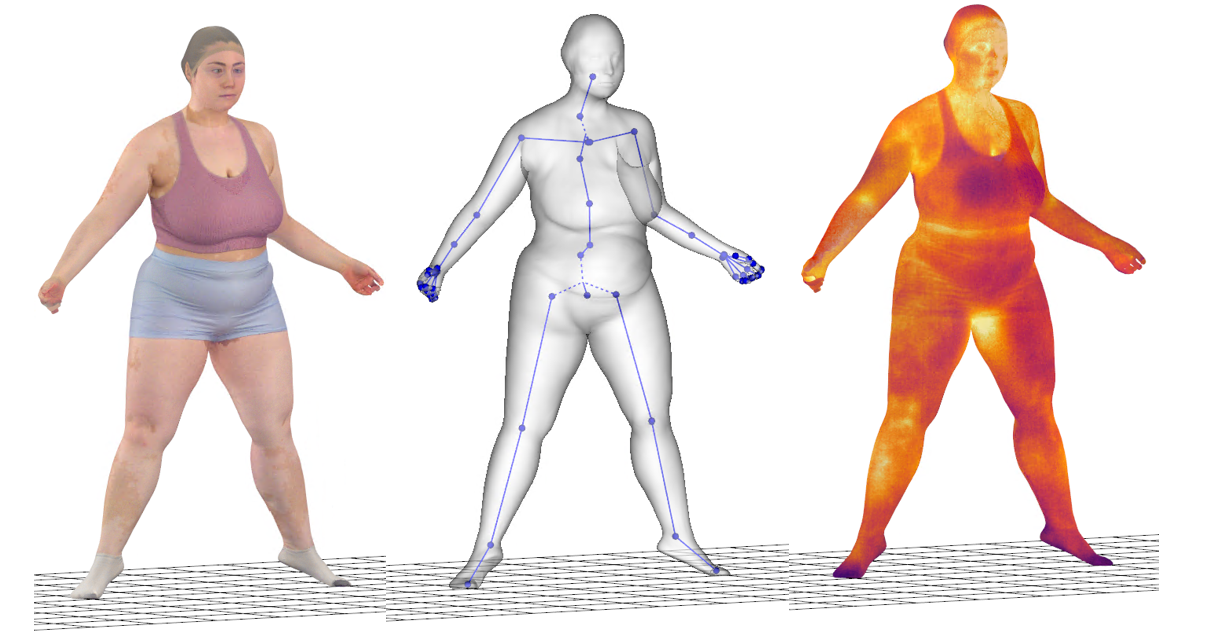
This new system aims to assess obesity in an agile, sustainable and non-invasive way, including the estimation of body composition and the associated metabolic risk, by combining technologies for measuring body shape and anthropometrics, biomechanics, thermal response and genetic indicators.
The analysis, which will be validated in a cohort of one hundred individuals, is designed to be conducted objectively and in an automated manner, without requiring direct input from experts. This will reduce both the complexity and the cost of the process.
The initiative is supported financially by the European Union through the FEDER Comunitat Valenciana programme for the 2021–2027 period.
Comprehensive approach to a complex disease
This initiative seeks to address the consequences of the growing prevalence of obesity, which the World Health Organization (WHO) has already classified as a pandemic. Obesity is a chronic, complex disease characterised by excess body fat that increases the risk of serious health complications.
Diseases associated with obesity include type 2 diabetes and the risk of sarcopenia (loss of muscle strength and mass), as well as certain types of cancer, such as breast, colon, endometrial and oesophageal cancer. It also affects mental health and quality of life, as people living with obesity often experience stigmatisation and discrimination, which can lead to low self-esteem, anxiety and depression.
Precisely because obesity is a complex disease and can cause problems across different body systems, it must be addressed from a comprehensive perspective. This requires a complete and personalised evaluation of each patient, analysing how body mass is distributed, the individual’s metabolic risk, and any complications or functional limitations.
Cutting-edge technologies
Although methodologies currently exist to assess these aspects separately, such approaches have limitations that hinder their integration into care pathways due to their high cost or observer subjectivity, such as magnetic resonance imaging (MRI) or dual-energy X-ray absorptiometry (DXA).
‘FITME’ aims to overcome these barriers through a new approach to the personalised study of obesity based on the application of human shape analysis technologies, markerless biomechanical analysis and thermographic techniques, which are non-invasive and do not expose volunteers to radiation.
In addition, omics techniques will be used to provide a comprehensive analysis of a person’s genetic and metabolic information through the study of biomarkers and each patient’s microbiome.
Based on this information, predictive algorithms will be developed, on the one hand using genetic data and, on the other, combining morphofunctional and thermographic variables, together with a final model capable of estimating each patient’s body composition, body fat distribution and metabolic risk in a personalised and accurate manner.
Participating organisations and current stage of the initiative
As project coordinator, IBV will provide the technologies required to assess body shape and function, as well as thermographic analysis tools. To this end, it will implement specific methodologies and develop the models and algorithms for the predictive system.
Similarly, Sabartech will contribute its genetic and microbiota analysis technology, together with advanced algorithms, to identify each individual’s metabolic risk on the basis of these data.
The clinical study is being carried out by INCLIVA, which, in addition to recruiting participants, will collect a significant proportion of the data required for these assessments. Ascires will also contribute by providing volunteers and will be responsible for conducting CT scans and analysing clinical samples.
The initiative is currently in the experimental phase, having already begun participant recruitment and data collection, which will form the cornerstone for advanced analyses and the development of the predictive models envisaged in subsequent stages of the project.
‘FITME’ falls within the main priority areas of the Smart Specialisation Strategy of the Comunitat Valenciana (S3), coordinated by the Regional Ministry of Innovation, Industry, Trade and Tourism.
The initiative also aligns with the conclusions of the Health Strategic Committee for Specialised Innovation (CEIE), which calls for the development of innovations that advance the personalisation of diagnosis, prognosis and treatment in healthcare, as well as the prevention and control of chronic diseases.
The FITME project (INNEST/2024/275) is supported by the Valencian Innovation Agency (AVI) (IVACE+i Innovación) of the Generalitat Valenciana, within the Strategic Cooperation Projects Programme, and is co-financed by the European Union through the European Regional Development Fund (ERDF) Programme, FEDER Comunitat Valenciana 2021–2027.