



The IBV drives innovation and competitiveness at nearly 1,000 companies in 2025, creating solutions that put people first
The Instituto de Biomecánica (IBV) has presented its results for the 2025 financial year, consolidating its position as one of the leading technology centres in Spain and Europe, as well as its role as a key agent in the transfer of knowledge and technology to business, industry and society.
With a workforce of nearly 170 highly specialised professionals, revenue of €11.5 million and a social return of €15.06 for every euro invested, the centre—a benchmark in health, well-being and quality of life—has strengthened its economic and social impact in a year marked by accelerating technological change and geopolitical uncertainty.
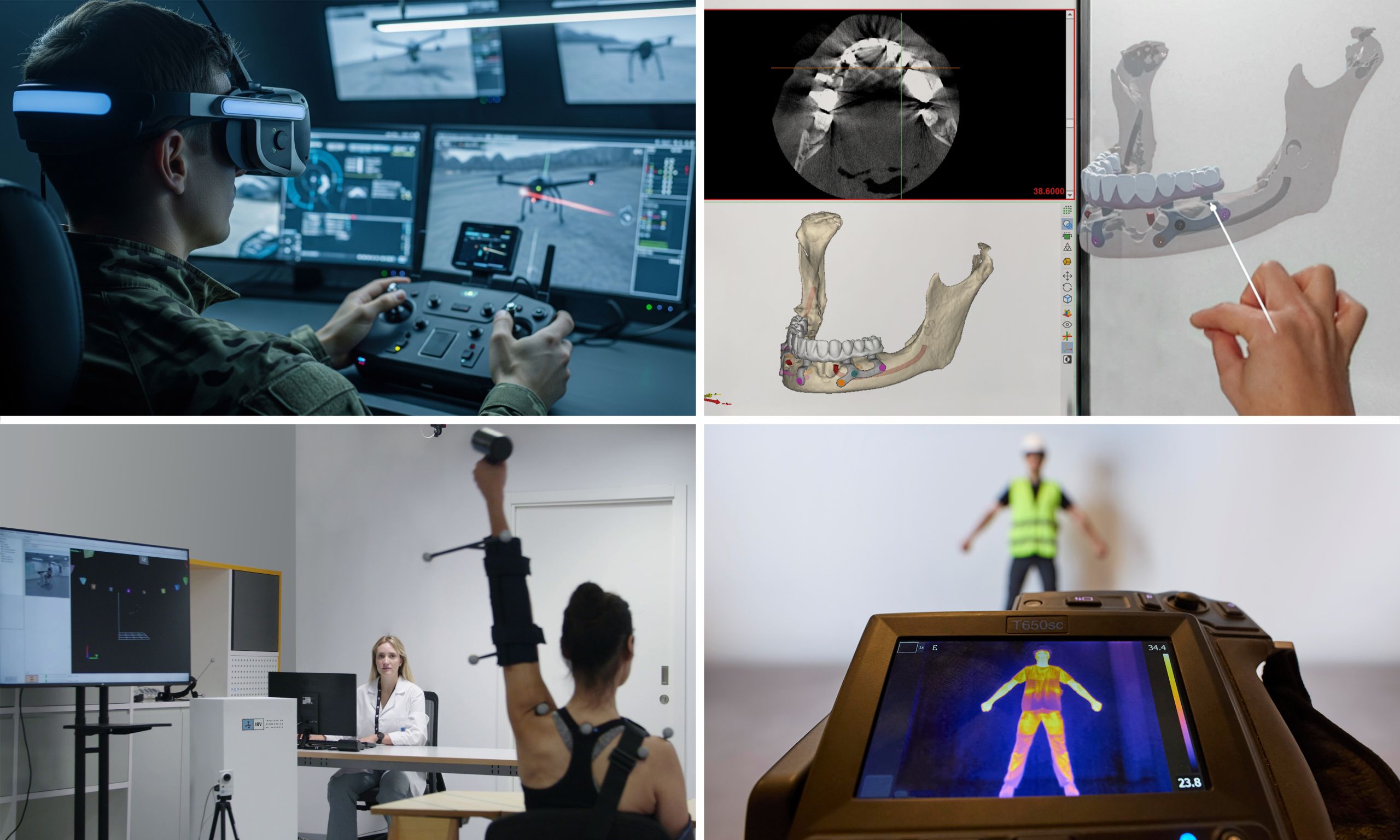
Through extensive activity in sectors such as health, security and defence, the automotive industry, mobility and smart cities, sport, clothing and footwear, and occupational health and well-being, the technology centre collaborated with nearly 1,000 companies and institutions during the year through R&D&I projects, technology services and the transfer of advanced technologies. Of these, 25% were based in the Valencian Community, 54% elsewhere in Spain and the remaining 21% in international markets. This distribution reflects the Institute’s ability to generate an impact locally while promoting Valencian innovation globally.
IBV also strengthened the transfer of functional assessment laboratories in Spain and Latin America. Their applications meet the highest standards of quality, safety and traceability under the Medical Device Regulation (MDR), with certification from the notified body INTERTEK. The centre also transferred solutions designed to improve working conditions by analysing ergonomic risks to prevent musculoskeletal disorders. In addition, it continued to expand the reach of MOVE4D, its dynamic human body scanning technology, which is at the forefront of innovation worldwide and has already been installed in the United States, Canada, Germany, Belgium, Japan and China. This technology is enabling progress in cutting-edge research at companies, universities and prestigious research centres such as the Canadian Institute for Safety, Wellness, and Performance.
The centre has also promoted technology projects and services in strategic areas such as security and defence, integrating human factors as an operational capability and applying this perspective to critical scenarios, human–machine interaction and autonomous systems, performance and resilience, simulation and training, and health, protection and recovery. It has also worked in emerging fields such as digital health, which is becoming increasingly important for personalising treatments, improving surgical planning, enabling early diagnosis and predicting pathologies, thereby shifting conventional medicine towards a model based on predictive medicine. Other areas of activity include fields of clear social relevance such as longevity, frailty prevention and the promotion of active and healthy ageing, as well as traditional sectors such as footwear, clothing and occupational health and well-being.
In the words of Javier Sánchez, Managing Director of IBV: “We continue to make progress in our aim of generating useful knowledge and effectively transferring it in the form of tangible solutions to the productive sector and society. This year has been marked by growth in our international activity, particularly in North America, Asia, Europe and Latin America, and by the expansion of our capabilities in strategic sectors. It is not enough for a technology to be accurate in the laboratory; it must be portable, robust, integrable, understandable to users and useful in real-world settings.”
The Institute’s impact has also been reflected in its contribution to GDP and job creation. According to the recent IVIE¹ study on the impact of technology centres, every €1 million invested is estimated to have generated €11 million in income, €26.4 million in sales and 181 jobs. “These figures highlight the decisive contribution made by technology institutes—and IBV in particular—as essential infrastructure for generating economic progress, business competitiveness and social well-being,” Sánchez stated.
“These results have been made possible by the continued support of the Generalitat Valenciana, through IVACE+i funding, and by its commitment to technology institutes as strategic partners for companies and the productive sectors of the Valencian Community,” Javier Sánchez concluded.
All information on the activities and projects undertaken in 2025 is available at:
https://www.ibv.org/anuario/Anuario2025/
¹ Value and economic impact of Fedit technology centres 2026.